Why the Opal Pendant Remains a Timeless Jewelry Favorite
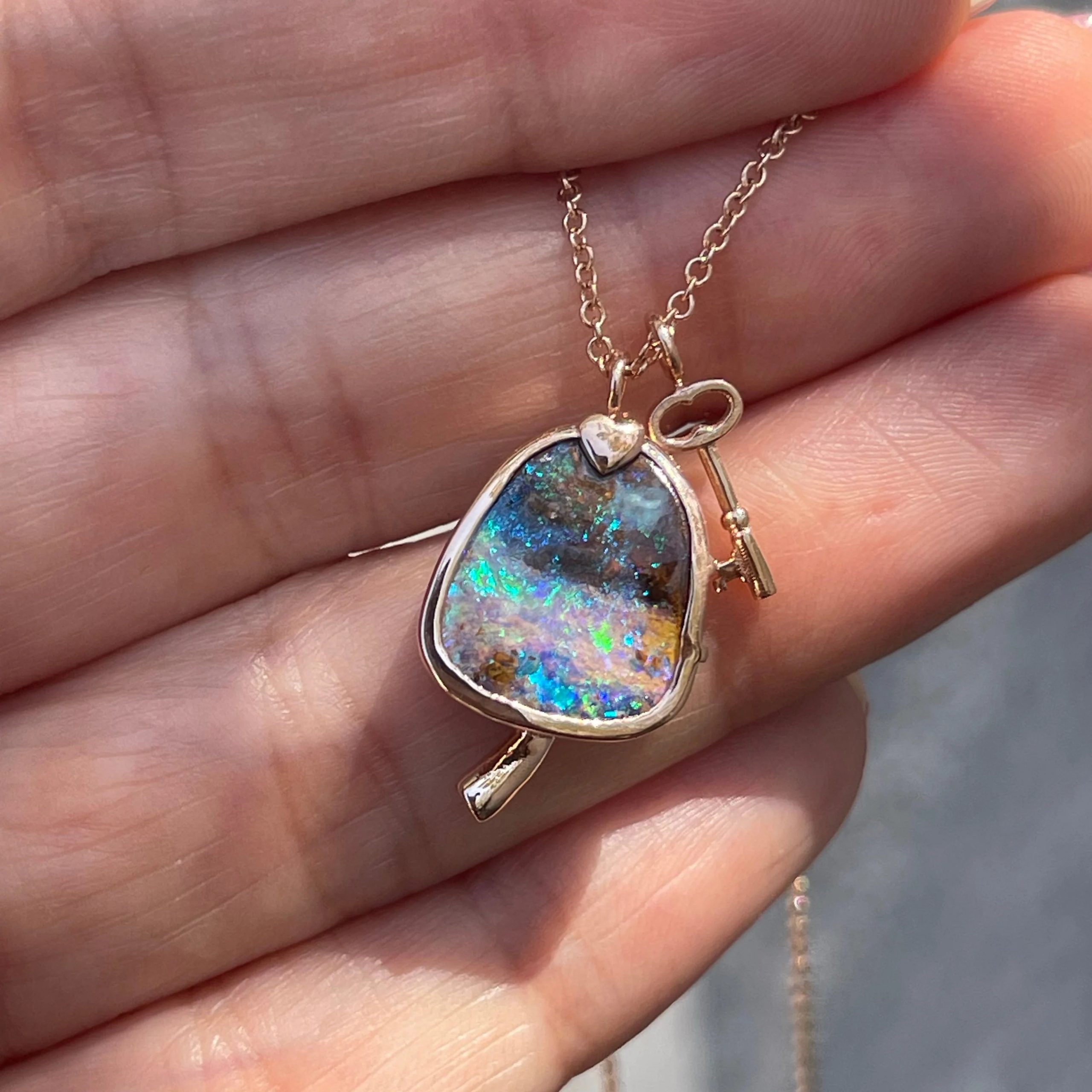
The opal pendant has long been admired for its mesmerizing play of color. Light dances across its surface in shifting hues. No two stones look exactly alike. This uniqueness makes each piece feel deeply personal. Wearers often describe an emotional connection to their jewelry.
Its appeal spans generations and cultures. Vintage designs remain popular today. Modern interpretations add fresh flair. Whether set in silver, gold, or platinum, the opal pendant adapts beautifully. It fits into both classic and contemporary wardrobes.
Jewelry lovers appreciate its expressive nature. Unlike clear gemstones, opals shimmer with mystery. They reflect mood and movement. Some see rainbows; others notice flashes of fire or water. This dynamic quality keeps attention alive.
Artisans value the challenge it presents. Cutting and setting opals requires skill. The stone is softer than many gems. It needs careful handling. Yet when done well, the result is breathtaking. A well-crafted opal pendant becomes a treasured heirloom.
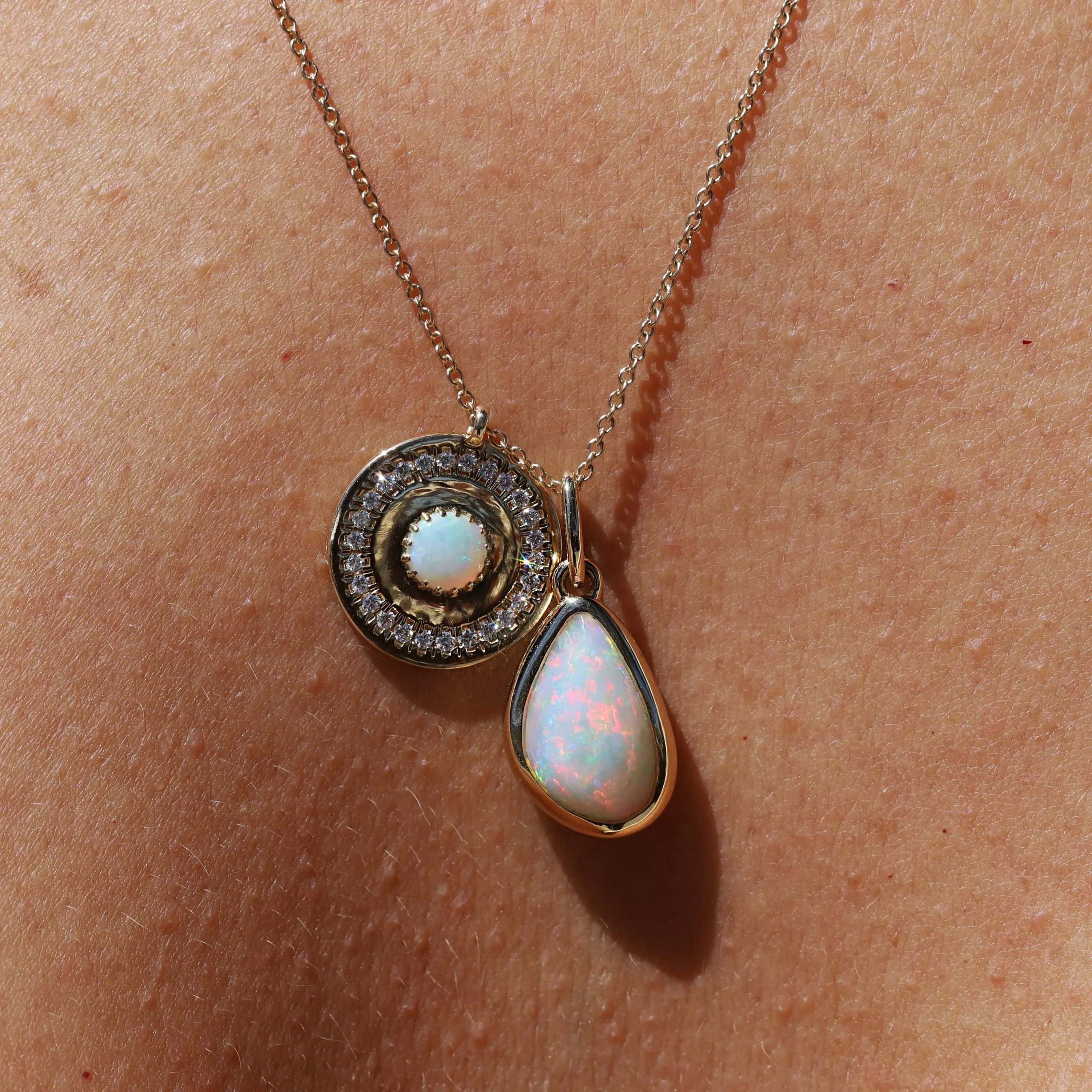 Understanding the Unique Beauty of Opal Stones
The Science Behind the Sparkle
Opals form over millions of years. Silica-rich water seeps into cracks in rock. As the water evaporates, tiny spheres of silica deposit in layers. These structures diffract light like prisms. That creates the signature rainbow effect.
The size and arrangement of these spheres determine the colors seen. Larger spheres produce red and orange tones. Smaller ones yield blue and green. This natural variation ensures no two opal pendants are identical. Each one tells a geological story.
Types of Opals Used in Pendants
White opals are the most common choice. They have a milky base with colorful flashes. Their brightness works well in daylight settings. Many find them easy to wear daily. They pair effortlessly with casual outfits.
Black opals offer deeper contrast. Their dark background intensifies the spectral display. These are rarer and more valuable. Collectors often seek them for special occasions. Ethiopian opals bring another option. They are known for vibrant patterns and durability. Each type brings distinct charm to the opal pendant.
 Design Variations
Setting Styles That Protect and Showcase
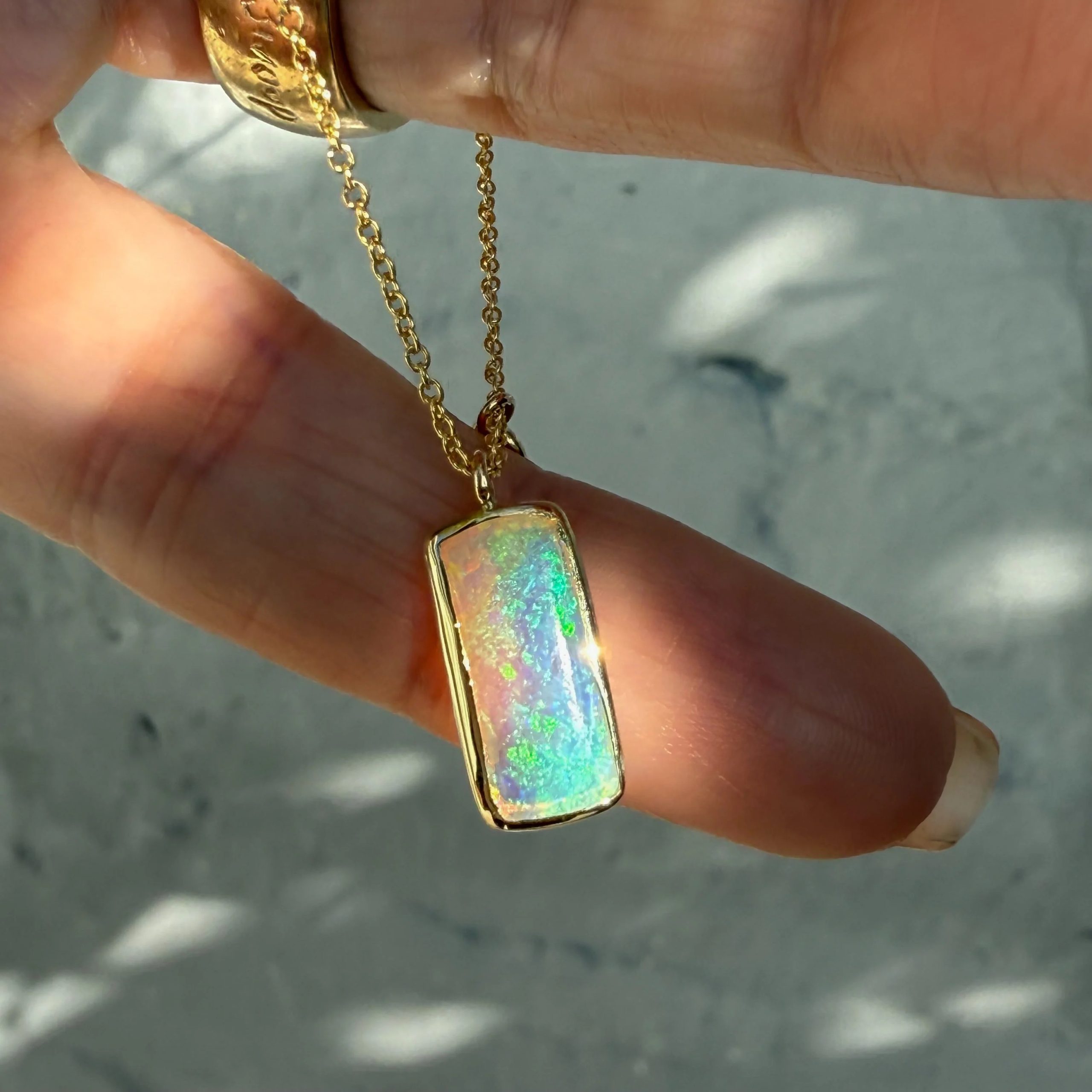
Bezel settings wrap metal around the edge of the stone. This protects the opal from chipping. It also gives a sleek, modern look. Many designers use this style for everyday pieces. It combines safety with elegance.
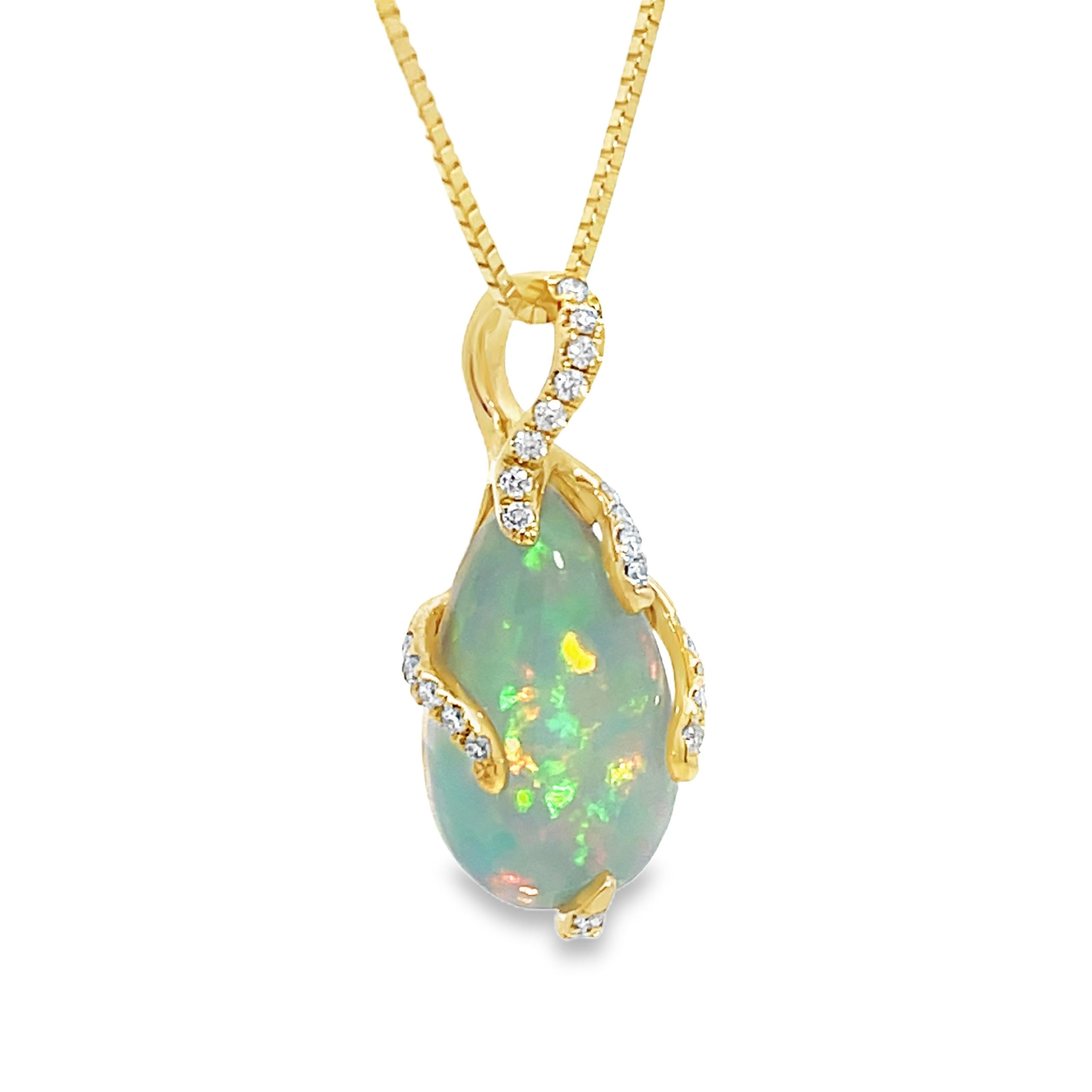
Prong settings lift the stone higher. More light enters from below. This increases brilliance and flash. However, prongs require more care during wear. They suit occasional-use pendants. Delicate handling preserves their beauty.
Metal Choices That Complement the Stone
Yellow gold warms up the opal’s cool tones. It adds richness and tradition. Many vintage-inspired opal pendants use this metal. It pairs well with warmer skin tones. The combination feels luxurious and timeless.
White metals like platinum or sterling silver create contrast. They let the colors stand out boldly. Cool undertones enhance blues and greens. Rose gold offers a middle ground. Its blush hue softens sharp edges. Each metal alters the pendant’s overall feel.
Symbolism and Meaning
Historical Beliefs and Cultural Significance
Ancient Romans saw opals as symbols of hope. They believed the stone contained the beauty of all gems. In Aboriginal Australian culture, opals represent the footprint of the creator. Myths link them to sacred light and creation stories.
During the Victorian era, opals gained popularity. Queen Victoria herself favored them. She gifted opal pendants to her daughters. This royal endorsement boosted their status. Sentimental jewelry flourished at the time. The opal pendant became a token of affection.
Emotional and Spiritual Connections
Many believe opals enhance creativity. Artists and writers wear them for inspiration. Others say they promote emotional balance. The shifting colors mirror inner feelings. Wearing an opal pendant can feel like carrying a mood ring.
Some associate the stone with love and fidelity. It appears in engagement rings and anniversary gifts. Couples choose it for its unique character. An opal pendant symbolizes a bond that defies convention. It speaks to deep, evolving relationships.
 How to Care for Your Pendant
Daily Maintenance Tips
Avoid exposing your opal pendant to harsh chemicals. Perfume, lotion, and hairspray can damage the surface. Always apply cosmetics before putting on jewelry. This simple step prevents buildup and erosion.
Remove the pendant before swimming. Chlorine and saltwater weaken the stone over time. Showers and baths pose risks too. Steam opens pores in the opal. Moisture loss leads to cracking. Prevention is easier than repair.
Long-Term Storage and Cleaning
Store your opal pendant separately. Other jewelry can scratch its surface. Use a soft pouch or lined box. Keep it away from direct sunlight. Prolonged exposure dries out the stone. Heat causes fading and fractures.
Clean gently with a damp cloth. Never soak it in water. Use mild soap if needed. Dry immediately with a lint-free towel. Ultrasonic cleaners are unsafe. So are steamers and strong detergents. A little care goes a long way.
Styling the Pendant for Any Occasion
Dressing Up for Formal Events
An opal pendant elevates evening wear instantly. Pair it with a black dress for contrast. Choose a high neckline to frame the piece. Let it be the only bold accessory. Minimalist earrings complete the look.
Consider layering with a delicate chain. Add a second necklace just above the collarbone. Keep it thin and subtle. The opal remains the star. Balance enhances sophistication. Confidence grows with polished details.
Incorporating Into Casual Outfits
Wear the opal pendant with a simple t-shirt. Let it rest against solid fabric. Denim shirts also work well. The rugged texture contrasts with the gem’s soft glow. Tuck in the shirt to highlight the pendant. Simplicity draws focus.
Try pairing it with earthy tones. Browns, greens, and creams support its natural origin. Avoid neon colors nearby. They compete visually. Neutral backgrounds let the opal shine. Even jeans and sneakers become stylish with this touch.
Where to Find High-Quality Pendants
Shopping Online With Confidence
Start by researching reputable retailers. Look for sites with detailed product descriptions. Clear photos from multiple angles help. Zoom features reveal surface details. Videos showing movement under light are especially useful.
Read customer reviews carefully. Real experiences offer insight. Watch for comments about color accuracy and durability. Return policies matter too. A good seller allows returns within a reasonable window. Secure checkout protects your data.
Visiting Local Jewelers and Craft Fairs
In-person shopping lets you see the opal pendant firsthand. Natural light reveals true colors. Hold it in your hand. Feel the weight and texture. Ask questions about origin and treatment. Knowledgeable staff build trust.
Independent jewelers often carry unique pieces. Handmade opal pendants stand out from mass-produced ones. You might even commission a custom design. Supporting artisans fosters creativity. Personal service enhances satisfaction.
 Common Questions
Is the opal pendant durable enough for daily wear?
Yes, but with some precautions. Opals rank between 5.5 and 6.5 on the Mohs hardness scale. They are softer than diamonds or sapphires. Daily wear is possible if you avoid impacts. Remove it during physical activities.
Protect it from sudden temperature changes. Extreme heat or cold can cause cracks. Store it properly when not in use. Regular inspections catch early signs of damage. With mindful habits, your opal pendant lasts years.
Can I wear my opal pendant in the shower?
It is best to remove it before showering. Water exposure may harm the stone over time. Some opals absorb moisture, which leads to instability. Others dry out and develop fine lines. Soap residue builds up on the setting.
Steam opens microscopic pores. Humidity weakens internal structure. Long-term effects include dullness and fracturing. Taking it off takes seconds. This small action prevents major issues later. Preserve its luster with caution.
Does the opal pendant lose its color over time?
Not if cared for properly. Natural aging occurs slowly. Most opals retain their play-of-color for decades. Poor storage accelerates fading. Exposure to sunlight and heat speeds deterioration. Proper conditions slow the process.
Some treated opals behave differently. Doublets and triplets have layered construction. These may delaminate if wet. Solid natural opals are more stable. Know what type you own. Care accordingly to maintain vibrancy.
How do I know if my opal pendant is real?
Examine the color pattern closely. Real opals show irregular, swirling flashes. Lab-made versions often have uniform blocks of color. Movement changes with viewing angle. Genuine stones shift dynamically.
Check the backing if visible. Triplets have dark backing material. Doublets combine thin opal with base. Solid opals lack artificial layers. Ask for certification with high-value purchases. Expert appraisal confirms authenticity. Trust your eyes and instincts.
 Final Thoughts
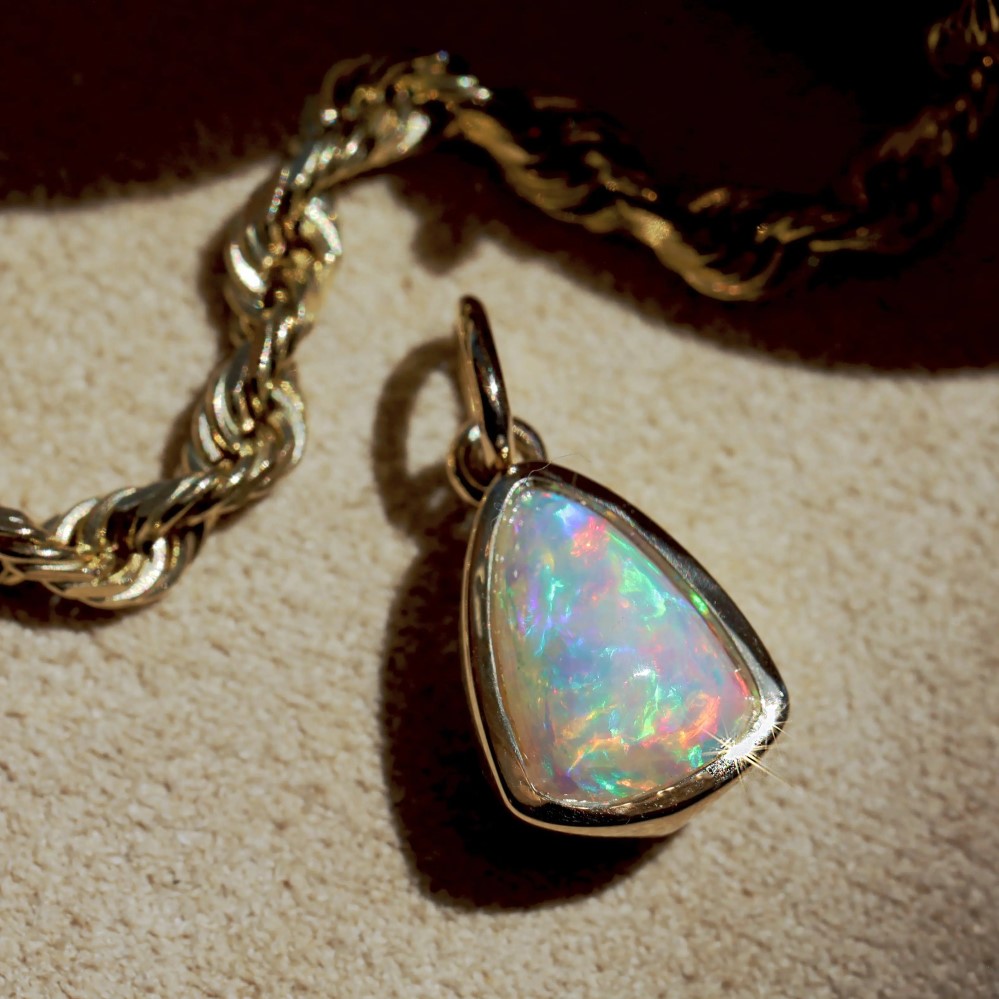
The opal pendant continues to inspire awe and admiration. Its ever-changing colors captivate the eye. Each glance reveals something new. It is not just jewelry—it is art in motion.
People cherish it for its individuality. No machine can replicate its organic beauty. It connects us to nature’s wonders. Wearing one feels like carrying a fragment of magic.
Designers keep finding fresh ways to showcase it. Settings evolve while honoring tradition. Metals adapt to current tastes. Yet the stone itself remains unchanged. Nature’s craftsmanship endures.
For gifting, few pieces convey such depth. Birthdays, anniversaries, and milestones gain meaning. The opal pendant marks moments worth remembering. Sentiment grows stronger over time.
In conclusion, the opal pendant stands apart in the world of jewelry. It blends rarity, emotion, and visual drama. Consider adding one to your collection. Discover how it transforms your style. Let its glow become part of your story.